


Complete Concert Guide - Verdi, Theofanidis & Prokofiev: Mar 20–22, 2026
Updated: Mar 24

DIVE IN Below to read and watch stuff!
🤓Your cool nerd stuff Is here!🤓
I interviewed Brook Ferguson, Principal Flute of the Colorado Symphony. So many nerdy nuggets in this one, including an outtake at the very end of this 23 min "director's cut"!
The Program...

Giuseppe Verdi
La Forza del Destino Overture
DIVE IN!
Giuseppe Verdi, AKA Joe Green (1813-1901) was an Italian composer primarily known for his operas and dramatic composition style. He was so beloved that an estimated crowd of 300,000 people turned out for his funeral.
About the music:
Giuseppe Verdi composed his opera La Forza del Destino - The Power of Fate - in 1861 at the commissioning request of Tsar Alexander II of Russia. It was premiered in 1862 in St. Petersburg.
The story of the opera is based on a Spanish drama with a few alterations, and in many ways mirrors Shakespeare's tragedy Romeo and Juliet. Star crossed lovers from powerful families, accidental murder, and revenge sound familiar but in this opera every one of the primary characters dies after a series of completely unbelievable events. It's opera after all!
The overture is very popular and performed often as a stand alone work on symphony programs. It begins with a fate motive - a series of 3 unison notes blasted twice by the brass - before continuing with a somewhat ominously nervous theme in the rest of the orchestra. Even the lighter melodic material introduced later seems a bit manic with this fate theme threatening to return.
This music is immediately engaging for listeners who love a juicy tale told with sound.
A typical performance lasts about 8 minutes.
Resources:

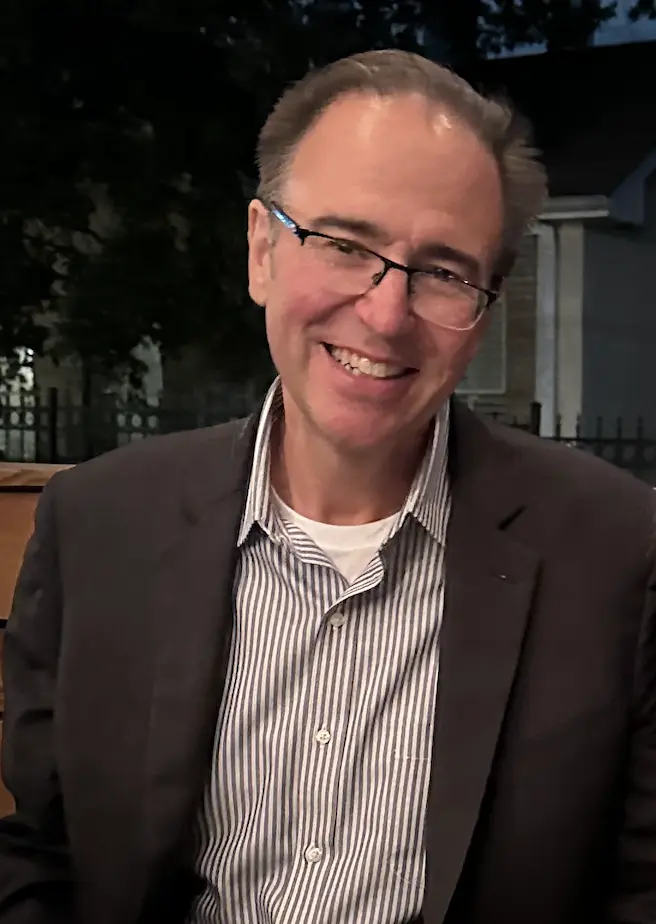
Christopher Theofanidis
Gemini Sun
DIVE IN!
Christopher Theofanidis (1967 - ), is an American composer from Dallas TX whose works have been performed by many of the world’s leading performing arts organizations. He is a two-time Grammy nominee for best composition, and I would be sentenced to an eternity in viola club hell if I didn’t mention his Viola Concerto, recorded by Boulder’s own Takacs quartet violist Richard O’Neill as soloist, won the 2021 Grammy for Best Instrumental Solo. Theofanidis is currently coordinator of the composition programs at Yale University and the Aspen Music Festival, and has taught at the Juilliard School and the Peabody Conservatory of Johns Hopkins University.
About the music:
Gemini Sun is the result of a consortium commission between the Colorado Symphony, Seattle Symphony, Frost School of Music, and New York Youth Symphony. The Colorado Symphony is premiering and recording Gemini Sun Mar 20-22, 2026. It will be performed again in early April by the Seattle Symphony before heading to the two student orchestras in the 2026-27 season.
Gemini Sun is a concerto for solo violin, solo percussion, and orchestra. The percussion soloist covers marimba, vibraphone, and a Bulgarian folk drum called tapan. This drum is quite large, worn on the shoulder with a strap, and played on both sides of the cylinder with different beaters. The kiyak is a thick wooden stick with a curved shape at the top and is used to produce low heavy tones as well as sharp lively thwacks on the rims or a rubbing sound by sliding across the ropes holding the drum heads together. The other beater is a long and very thin stick that tapers to a point. This one is used to produce complicated rhythms in a higher pitch so that the combination of the kiyak and the thin stick makes a complete rhythmic gesture almost like a drum set can do with its kick drum, snare, and cymbals.
I asked Christopher Theofanidis about the title of the concerto, "Gemini Sun". He explained there are two meanings behind it. Gemini - the astrological sign of twins - refers to the two soloists and the musical 'twinning' they do. Sun - for the astrological house of Gemini and for the shiny optimistic disposition of the piece. :)
Gemini Sun is in four movements, each with its own distinct characteristics.
Movement 1: Con brio - "With vitality"
The piece opens with a conversation developing between the solo violin, the solo percussionist on marimba, and the orchestra. It's melodic and harmonic qualities lend a sense of comfort and hint at flirtation.
Movement 2: Easy
This music has the percussionist switching over to vibraphone, an instrument that can be played with a sustain pedal similar to the piano and can be bowed for extra sustain power. Rhythmic pulsations ping around the orchestra while the violin and vibraphone play long melodic phrases, almost like a jazz combo that gets hotter and hotter as the tune progresses.
Movement 3: Cantabile - "Singing"
Although this movement is titled "Singing" it quickly transforms into a dance featuring the Bulgarian folk drum outlining typical Balkan rhythms grouped in odd numbered meters of 5, 7, and 9. It's lively and toe tapping.
Movement 4: Presto - "Very quick"
For this final movement, the solo percussionist returns to the marimba for a blazing fun finish that includes a final flirtation element in the back and forth whacks of a cadenza between the two soloists.
A typical performance lasts about 25 minutes.
Resources:

Sergei Prokofiev
Suite from Romeo and Juliet
DIVE IN!
Sergei Prokofiev (1891-1953) was a pianist and composer of Ukrainian heritage with Russian citizenship. He grew up hearing his mother playing Chopin and Beethoven at home on the piano. This had an undeniable effect on him leading him to compose his first piano piece at age five and his first opera at age nine.
Prokofiev was born near Donetsk, Ukraine, moved to St. Petersburg, Russia at age 13 to study at the conservatory there, toured internationally as a pianist and composer, lived in the United States, Germany, and France after the Russian Revolution, and then returned to settle in Russia as a citizen in 1927 with promises of support and a bright future. Unfortunately we know this only became partly true. He achieved initial fame and success, but by the late 1940s was called out for failing to compose music according to the official cultural taste of Stalin’s regime.
Since I shared a funeral fact about Verdi I may as well lay this one on you too… Prokofiev died on March 5, 1953 - the very same day Stalin's death was announced. For three days as the crowds gathered to mourn Stalin, it was impossible to carry Prokofiev's body out of his home for burial. :(
About the Music:
Sergei Prokofiev composed the ballet music for Romeo and Juliet in 1935 during a time of turmoil in the performing arts community. Despite the fact that he was instructed to change Shakespeare's ending so that Romeo and Juliet live, he managed to compose a richly told tale in music. There were many revisions, including changing the ending back to the original tragedy, before its premiere in 1938 in Czechoslovakia.
For you Shakespeare nerds out there, this one is more Baz Lurhman than Franco Zeffirelli, and maybe just a little bit ended up influencing Leonard Bernstein’s West Side Story music.
The score calls for a large and very colorful orchestra of piccolo, two flutes, two oboes, English horn, two clarinets, bass clarinet, tenor saxophone, two bassoons, contrabassoon, four horns, cornet, two trumpets, three trombones, tuba, timpani, percussion, celesta, harp, piano, and strings.
The use of the tenor saxophone really brings a different dimension to the ensemble. Conductor Laureate Marin Alsop once remarked that the very first time she heard saxophone in an orchestra setting was in this piece and she immediately thought “What is that?! Who let that cool sounding thing in here?” She also said that the final 4 measures of this music is so masterfully written that it basically tells the entire story without the need for anything that preceded it.
I would say that’s also true of the opening material - music that depicts the two powerful
families in the Montagues and Capulets, and the Duke's Command music which uses a powerfully intense buildup of dissonance - versus silky soft harmonies that are revealed to have been there all along if anyone could be sensitive enough to make space for them to just be.
A typical performance of the full ballet lasts just under 2 and 1/2 hours of heart stopping mind racing tear inducing awesomeness. Luckily, while waiting for the red tape and political machine to clear the full ballet to be premiered, Prokofiev made a set of much shorter suites that could be performed by the symphony orchestra alone. This in turn spurred other conductors to curate their own suites, as with the one described here put together by Music Director Peter Oundjian.
Introduction
Primary themes are introduced as we are taken in to Prokofiev's sound world.
Romeo
A dreamy solo in the clarinet gives way to a lush string version of the melody.
The Street Awakens
This music is cheeky and flirtatious with fun woodwind solos.
The Quarrel
Interlocking rhythms and punctuated jabs set the tone for this quarrel scene.
The Duke’s Command
This slow, threatening music which accompanies the Duke’s order that the warring families must cease fighting on pain of death is incredibly powerful stuff.
The Young Juliet
This music brilliantly captures the rapidly changing moods of the character’s adolescent personality. Listen for the naive and hopeful flute solo.
Masks
This music depicts the infiltration of Romeo, Mercutio, and Benvolio to the Capulet party.
Dance of the Knights
This music depicts the pride and aggression of each of the Montague and Capulet houses.
Balcony Scene
This gentle music opens like a sunrise.
Romeo’s Variation
Here we open into lush orchestrations of Romeo's theme.
Love Dance
The music becomes practically liquid with the shimmering strings here.
Dance of the Five Couples
This music is light and quick, featuring the woodwinds and a conversation between high and low strings.
Romeo at Friar Lawrence’s
Friar Lawrence is represented here by music in the bassoons and tuba.
Meeting of Tybalt and Mercutio
This music depicts spirited fight between Mercutio and Tybalt, leading up to the duel.
The Duel
Now this spirited music becomes at turns playful and foreboding.
Romeo Decides to Avenge Mercutio
This music is exciting in all the wrong ways. Sharp stabbing sounds and heavy dissonances depict Romeo avenging Mercutio’s death leading to the finale and its depiction of the killing.
Finale
In this music we hear Romeo stabbing Mercutio 14 times, and then the heavy musical depiction of Romeo's state of mind as he realizes what this will mean for him and Juliet.
Romeo and Juliet
This music once again returns to the naive sweet flute solo and shimmering strings as Romeo and Juliet meet again in her room to plan.
Dance of the Girls with Lillies
This music is gentle and flowing yet somehow still with a sense of foreboding, depicting girls bringing flowers to Juliet's window on the morning of her scheduled wedding to Paris.
Juliet’s Funeral
In this music you can practically hear the torn cloth and anguish of Juliet's family as they grieve her death.
Death of Juliet
This music ends the ballet when Juliet awakens from her drugged sleep to find Romeo dead beside her, and then decides to stab herself twice with the knife. We hear an intense re-orchestration of Juliet's theme before the music comes to a quiet ending.
There are so many wonderful things to discover about this music. The suite that Peter
curated tells the story of Romeo and Juliet as much as it tells the story of the colors of
the orchestra and the infinite ways composers can make expressions of humanity’s
struggles and joys using this giant instrument.
A typical performance of Peter Oundjian's curated suite lasts about 57 minutes.
Resources:
Please consider supporting my work by becoming a Backstage Pass subscriber! Thank you!
Comments