


Britten, Debussy, Price & Gershwin: Apr 24-26, 2026
Updated: Apr 30

DIVE IN Below to read and watch stuff!
🤓Your cool nerd stuff is Here!🤓
I interviewed Colorado Symphony Violinist Susan Paik about this program. We chat about the violin, this program, and how we were both bad children in this 18 minute video. Thank you for supporting my work by subscribing to Beeson's Backstage Pass so I can continue to make this and other content for our Nerd-o-sphere. 🤓
And now... The Program!
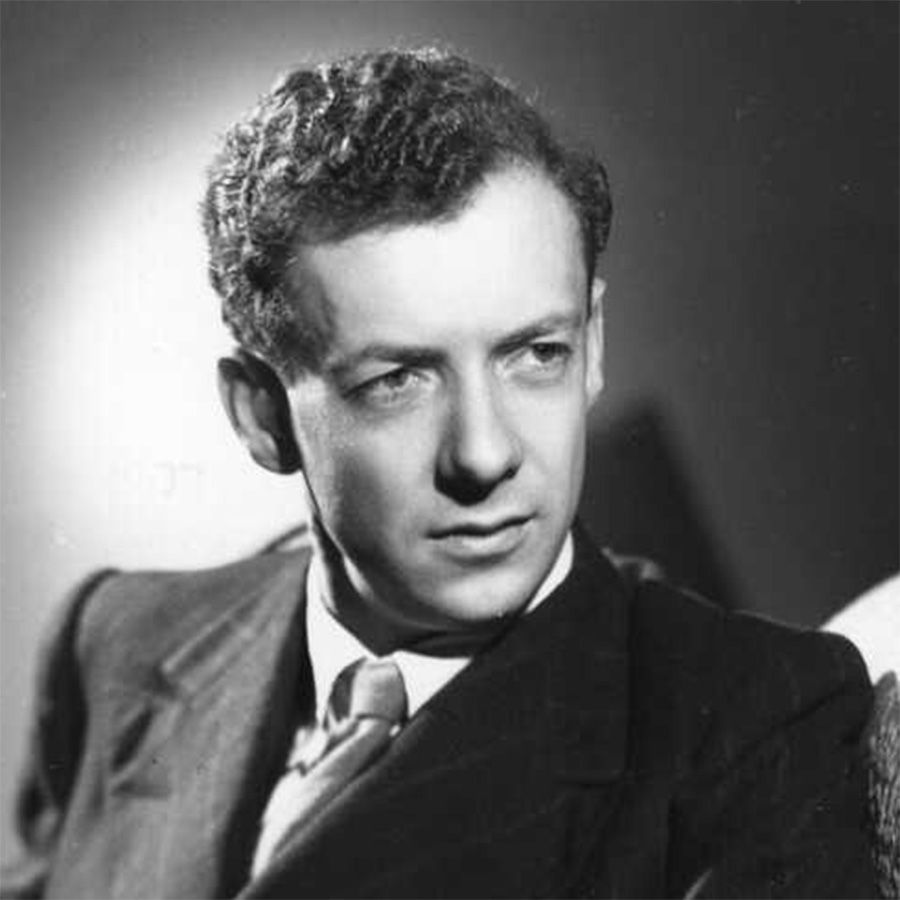
Benjamin Britten
Four Sea interludes, from peter grimes
DIVE IN!
Benjamin Britten (1913-1976) was one of the most influential English composers of the 20th century, especially well known for his large scale dramatic works and symphonic compositions. His operas tend to have a recurring theme of fitting in or fighting against societal pressure to conform. This is also evident in the very highly regarded and celebrated 1945 opera Peter Grimes from which the Four Sea Interludes come.
About the music
Benjamin Britten composed the sea interludes as interstitial pieces to give time for scene changes in Peter Grimes.
The basic synopsis of the opera centers on an ill-tempered fisherman who is possibly misunderstood and definitely persecuted by an untrusting and judgmental community. The opera is constructed to leave the audience wrestling with questions rather than delivering tidy answers. The fisherman Peter Grimes may or may not have committed murder and is essentially doomed to be an outsider in his own village, so he chooses to leave out to sea. It’s intentionally unsettling and there are many scholarly interpretations of this, and other Britten opera subjects, being extensions of his own sense of safety in the crosshairs as a gay man during a time when this was a punishable crime in England that would frequently result in chemical castration or imprisonment with hard labor. Britten himself wrote in 1948 that Peter Grimes was "a subject very close to my heart – the struggle of the individual against the masses. The more vicious the society, the more vicious the individual”.
The opera contains six orchestral interludes. Four Sea Interludes is a published set of the first, third, fifth, and second interludes entitled “Dawn”, “Sunday Morning”, “Moonlight”, and “The Storm” respectively.
In “Dawn” we experience the stillness and fragility of the start of day, complete with waking seagulls and the appearance of the sun over the horizon.
“Sunday Morning” brings Britten’s signature blending of optimism with manic energy or foreboding.
“Moonlight” conveys shadowy impressionism.
“The Storm”, as the title suggests, is a wild and powerful depiction of the struggle of the sea and also of a community in distress.
A typical performance of Four Sea Interludes lasts about 16 minutes.
Resources:

Claude Debussy
La Mer
DIVE IN!
Claude Debussy 1862-1918 was a French composer of the late 19th and early 20th centuries whose compositional approach signaled the dawning of Modernism and a sharp move away from heavy, thick, German influenced late Romanticism. His music was labeled “impressionistic” and therefore he is associated with other composers and artists of the time as “Impressionist” even though he vehemently rejected this label. He knew his approach to composition offered unique and fresh ways of molding and mapping sound, and he was happy to do things “his way” despite taking some guff for it from the establishment. Although Debussy was a musical trailblazer who paid painstaking attention to detail and planning in his compositions, people tend to connect more immediately to the brilliant, beautiful, and engaging sounds he created.
HIGHLIGHTS
Claude Debussy composed La Mer between 1903 and 1905.
La Mer lasts about 25 minutes and is in three segments: "From dawn to midday on the sea”, "Play of the Waves”, and "Dialogue of the wind and the sea”.
Even though it has been long established as a perennial fan favorite, La Mer got some pretty scathing reviews at its premiere:
"I do not hear, I do not see, I do not smell the sea”.
"The audience seemed rather disappointed: they expected the ocean, something big, something colossal, but they were served instead with some agitated water in a saucer.”
“Last night's concert began with a lot of impressionistic daubs of color smeared higgledy-piggledy on a tonal palette, with never a thought of form or purpose except to create new combinations of sounds. … One thing only was certain, and that was that the composer's ocean was a frog-pond and that some of its denizens had got into the throat of every one of the brass instruments.” Gulp!
Debussy’s score calls for 2 flutes and piccolo, 2 oboes and English horn, 3 bassoons and contrabassoon, 4 horns, 3 trumpets, 2 cornets, 3 trombones, tuba, timpani, percussion, 2 harps, and the usual string section of violins, violas, cellos, and basses.
Explore:
Here is a listening map that can guide you through your listening experience. Read it in advance or while you’re listening to a recording!
Movement 1: From dawn to midday on the seas
This music begins with slow moving and dark sounds from the lower strings and a pulsing harp which builds through the orchestra to a cascading series of woodwind sounds. Here we really sense the “waking” of the ocean with the cascades and ripples of sound bouncing around throughout the orchestra. About halfway through this movement an optimistic melody emerges from the cello section and we hear more active undulating rhythms that peak and then relax.. The music returns to a sense of calm with chords in the brass colored by harp and percussion, and closes with a stately march.
Movement 2: Play of the Waves
This music starts right away with shimmering sounds and solos from the English horn and oboe. The textures and colors change rapidly in this movement as strings, winds, and percussion playfully toss ideas around. About halfway through there is a real push in tempo and the sounds become very trilling and bright. Suddenly the bottom seems to drop out and we finish with a beautiful clear simplicity of gestures in the high woodwinds, harp, and percussion.
Movement 3: Dialogue of the wind and the sea
There is a sense of foreboding from the outset of this movement. Quick threatening gestures in the lower strings give way to an outburst from the full orchestra. We move from that outburst into rather breathless pulsing rhythms with loads of sudden dramatic dynamic contrasts between loud and soft. This dissipates over a few minutes into a hazy dreamlike sequence led first by the solo oboe and then gathering in direction with high percussion instrument and strings until a massive outburst happens. This one is short lived as the brass brings us down to earth, but then suddenly the orchestra comes alive again with pressing tempo and a renewed sense of urgency. We finish with wild outbursts flying all around the orchestra in a “leave everything on the field” moment.
Resources:
Consider, Discuss, activate! :
In La Mer, Debussy structures his music around short ideas or motifs rather than broader structures of the Classical and Romantic eras. He also draws the listener more into a tactile listening experience with musical textures and gestures than was customary practice in those earlier eras, and he pushes further across the boundaries of tonality - the idea of notes having roles and hierarchy organized around a sense of “home”. For these reasons and others, Debussy was considered to be a Modern Impressionist composer. He never appreciated being labeled Impressionist, but the label has stuck.
What do you think of when you hear the terms “Modern” or “Impressionist” or “atonal”? How do these terms and your understanding of them comport with your experience listening to Debussy’s music? What do you and your nerd crew appreciate or find puzzling about these labels when exploring Debussy’s music?
Claude Debussy has also constructed sounds for listeners to conjure mental images and sensations of nature in La Mer. Try it yourself! Go for a walk outside and bring a journal with you. Really focus on the things you see, hear, smell, feel, (or even taste if you should find some delicious treat along the way!) as though you are experiencing them for the first time. Note them in your journal and be as detailed as possible. When you return home take a fresh look at your journal notes.
How would you translate these into sounds? What instruments would you choose? What sorts of rhythms or pitches would you use?
Let your mind dream up anything! After all, that’s what Debussy did!

Florence Price
Piano concerto
DIVE IN!
Florence Price (1887-1953) is considered one of the first major African-American composers alongside other Harlem and Chicago renaissance era composers like Margaret Bonds, Julia Perry, Zenobia Powell, Undine Smith Moore, George Walker, and William Grant Still. Born in Little Rock, Arkansas, Price showed an immediate interest in music, initially studying with her mother. She made her first public piano recital at the tender age of 4 and had her first compositions published at the age of 11. An extraordinary intellect and achiever, Price graduated high school at 14 as valedictorian and was admitted into the prestigious New England Conservatory in Boston at the age of 15. It’s worth mentioning that, at the time, NEC was one of the few dedicated music schools that would accept African American students. At NEC she studied piano, organ, and music education, she composed her first symphony, and graduated with honors in 1906 before returning to Arkansas to look for work as a music teacher.
As you might imagine, Price had trouble gaining entry to teach in white institutions but she did find success at outstanding HBCUs, joining the faculty at Shorter College in Arkansas and later heading the music department at Clark Atlanta University. During this time her compositions were mostly shorter works for her students to perform.
In 1927 due to exceptionally frightening escalations in racial violence Price and her family moved to Chicago. It was there that she returned to her composition studies and work. Price’s big break came in 1932 when she won first prize awards in the Wanamaker Competition for her Piano Sonata in E minor AND her Symphony in E minor. The very next year a performance of that work by the Chicago Symphony Orchestra made her the first African American woman to have a symphony performed by a major orchestra. Not long after this, Marian Anderson sang Price’s spiritual arrangement “My Soul’s Been Anchored in de Lord” in her iconic and historic performance on the steps of the Lincoln Memorial, which really affirmed Price as a leading composer of her time.
Price found great success even as she endured and persevered through a lifetime of difficulty within the American classical music field as a woman of African heritage. Not surprisingly her greatest success was among the cultural powerhouse circles of both the Chicago and Harlem Renaissance. This was in stark contrast to her ability to be taken seriously by Eurocentric classical music gatekeepers. Despite having, as she wrote “an accumulation of hundreds of unpublished and unsubmitted manuscripts” that could’ve been properly evaluated if only they would be programmed in public performances. In frustration, she advocated for herself directly in a 1943 letter to famed mid 1900s Boston Symphony conductor Serge Koussevitsky, asking him to consider programming her work and writing “Unfortunately, the work of a woman composer is preconceived by many to be light, frothy, lacking in depth, logic, and virility. Add to that the incident of race—I have Colored blood in my veins—and you will understand some of the difficulties that confront one in such a position” adding that she “would like to be judged on merit alone.” He neither responded nor programmed any of her works.
Price died ten years later in 1953, just before traveling to Paris to accept an award for her compositions. Due to lack of publication, limited performance history during her lifetime, and advocacy by others after her death she very nearly disappeared from memory. This, after composing over 300 pieces of music including large scale symphonic works, piano and violin concertos, chamber music, art songs, and numerous works for organ and solo piano.
Okay but wait! There’s a twist!
Not unlike the way Felix Mendelssohn rediscovered the nearly altogether lost works of JS Bach and revived his reputation, a treasure trove of Florence Price’s manuscripts and papers were discovered in 2009 in an abandoned house in St. Anne, Illinois that she had once rented. This house was in extreme disrepair and was being renovated by people who could’ve easily just swooped in and tossed it all in a dumpster. Instead these papers and manuscripts found their way to archivists at University of Arkansas and now, after all these years, Florence Price’s lost works have been published and are being performed internationally.
About the Music:
Concerto in One Movement in 1934 at the request of conductor Frederick Stock after the successful Chicago Symphony premiere of her Symphony No. 1 in E minor.
While it is brief, clocking in at just about 17 minutes, it still gives the impression of a multi movement journey of medium tempo, slow tempo, and quick tempo sections. There are brief pauses built in between each of these sections, further giving the impression of a 3 movement structure, but the score is not written to come to a full stop.
The final quick tempo portion mirrors the 3rd movement African diaspora Juba dance also present in her E minor symphony. (See video below for more info on Juba.) The inclusion of African, and specifically African-American, rhythms and melodies was intentional for Price and a reflection of similar techniques from other composers - for example Aaron Copland, Antonín Dvořák, or Béla Bartók - who chose to celebrate their heritage through folk influences.
This concerto was premiered by Price herself in 1934 to favorable reviews. After this several of her works, including the Piano Concerto in One Movement, were played by the Women’s Symphony Orchestra of Chicago, resulting in a long and productive collaboration which helped platform Price and begin to build her legacy.
The Piano Concerto did receive multiple performances by major orchestras in her lifetime but somewhat fell into obscurity along with much of Price’s catalog after her death. Partly this was due to a decline in support from women’s orchestras as World War 2 hit a pause button on their activities which then was compounded by waning memory after Price’s death in 1953 and the subsequent loss or ‘hibernation’ of her scores. Among the scores long thought to be lost was the Piano Concerto.
The miracle of discovery of the Piano Concerto score is also one of frustration and tragedy. One of Florence Price’s daughters inherited the summer home where Price would work on compositions. Price’s daughter had been in contact with the University of Arkansas to build her mother’s archives, however, that connection was lost and somehow not pursued by the university after her own death in 1975. The home and its contents languished until 2009 when a fix’n’flip married couple purchased it and began renovating. The woods had grown up around it, at one point portions of the roof caved in, and there was evidence of animals and humans having disturbed the contents on top of the weather wreaking havoc. Still, they discovered a treasure trove of manuscripts and instead of chucking them in the dumpster, they thought to contact someone about them.
Fortunately, this marked a discovery of a significant amount of her manuscripts, including the Concerto’s score reduction for two pianos which had some limited but helpful notes and sketches about orchestration choices written in the margins. Composer Trevor Weston used this to reconstruct a full orchestration so that it could be performed again.
The discovery, study, reconstruction, and publishing of all these heretofore lost works brought a wave of renewed interest in Florence Price’s work including more finds. One of these, found at an auction in 2019, was an apparent orchestra score of the concerto. This led to a newly published version edited by orchestrator Nick Greer and Utah Symphony Principal Librarian Clovis Lark which has become the standard for performances now.
SHOUT OUT TO LIBRARIANS, THE SECRET SAUCE TO EVERYTHING.
Learn a little more about These Worlds in Us directly from the composer in the short video below.
Resources:

George Gershwin
Rhapsody in Blue
DIVE IN!
George Gershwin (1898-1937) was an American composer and pianist known primarily as a crossover genre composer of jazz, Tin Pan Alley popular songs, and classical music. In the classical realm he is most famous for his symphonic work An American In Paris, his opera Porgy and Bess, and his piano concertos Rhapsody in Blue and Concerto in F.
Gershwin is one of the United States’ most well known and revered composers from the 1900s despite being rejected from compositional tutoring by both Nadia Boulanger and Maurice Ravel. And even though he died at the early age of 38 he managed to compose numerous pieces of music for large and small scale ensembles including 10 orchestral works, 2 operas, 19 musicals, and 5 film scores. He is quoted as saying “true music must reflect the thought and aspirations of the people and the time. My people are Americans. My time is today.”
Highlights:
George Gershwin composed Rhapsody in Blue in 1924. It was first intended for solo piano and jazz band, as it was premiered. Later in 1942 it was reorchestrated for symphony performance. Both the jazz band and symphonic orchestrations were done by Ferde Grofé.
The story of its creation is pretty astonishing for its risky chutzpah. Noted bandleader Paul Whiteman was planning a special concert to celebrate jazz music and asked Gershwin to composed a concerto for the occasion. This was November, in advance of a mid February performance date. Gershwin declined the invitation based on 3 months not being enough time to compose and allow for any revisions. Flash forward to early January when George’s brother Ira noted a newspaper article mentioning the concert and touting a new concerto by George Gershwin, which of course came as a surprise! He contacted Whiteman who then convinced Gershwin to do it after all with just 5 weeks time remaining!
Gershwin claimed that he got the first thematic ideas during a train ride to Boston. According to his biography: “It was on the train, with its steely rhythms, its rattle-ty bang, that is so often so stimulating to a composer.... I frequently hear music in the very heart of the noise. And there I suddenly heard—and even saw on paper—the complete construction of the rhapsody, from beginning to end. No new themes came to me, but I worked on the thematic material already in my mind and tried to conceive the composition as a whole. I heard it as a sort of musical kaleidoscope of America, of our vast melting pot, of our unduplicated national pep, of our metropolitan madness. By the time I reached Boston I had a definite plot of the piece, as distinguished from its actual substance.”
Gershwin began composing on January 7 and sent a finished score reduction for two pianos to Ferde Grofé who then completed the jazz band orchestration on February 4, eight days prior to the performance.
Gershwin premiered the concerto himself on this special concert which bandleader Paul Whiteman titled “An Experiment in Modern Music”. This program was highly anticipated - sort of a South By Southwest Music Festival of 1920’s New York - and drew a substantial audience. By most accounts the concert was mostly dull and many people left early but those that stayed to hear the premiere of Rhapsody in Blue responded enthusiastically.
Critical reviews were mixed, even many years after its premiere and adaptation to a symphonic setting. Here are some choice juicy ones:
"begins with a promising theme well stated" yet "soon runs off into empty passage-work and meaningless repetition.”
"derivative", "stale", and “inexpressive"
“The composer, trying to write a Listztian concerto in a jazz style, has used only the non-barbaric elements in dance music, the result being neither good jazz nor good Liszt, and in no sense of the word a good concerto.”
Of course none of these reviews have kept Rhapsody in Blue from being one of the most popular and recognizable pieces of music of the Modernist era. The opening clarinet solo with its slinky glissando is positively iconic and even though United Airlines might make you feel like the Rhapsody is synonymous with locating your nearest exit before inflating your life jacket, it’s still as warm, engaging, and exciting as the day it premiered.
A typical performance of Rhapsody in Blue lasts about 16 minutes.
Resources:
Consider/Discuss/Get Active!
What is a Rhapsody and what makes this one Blue?
A rhapsody is a piece of music with rapidly changing moods and tempos and often has a somewhat improvisatory feeling. Usually there is a single idea or emotion that the composer wants to convey to the listener in a carefree and thoughtful manner without the constraints of structure. It’s a lot like free verse poetry in this way, a sort of musical daydream. George Gershwin titled his musical daydream Rhapsody in Blue for a very good reason. Gershwin was mostly known as a jazz and pop music composer before he became interested in classical music. In this piece he incorporated a jazz style, “the blues”, with classical symphony music to create this “blues” rhapsody.
Combining musical styles
George Gershwin combined jazz and classical styles to create Rhapsody in Blue. Although these two styles seem very different, the combination produced a rich new sound for the symphony orchestra. Consider some other musical styles that could be combined with classical symphony orchestra music. How might these combinations sound unique? How might the different styles influence each other?
Creating a Rhapsody!
Feeling like experimenting? Pick a familiar tune you can sing or play. Now choose a contrasting musical style to combine with that song. Jot down a list of the unique qualities of this style. Be as detailed as possible! Consider how to combine the familiar tune with qualities and elements you listed. Remember a rhapsody changes moods and tempos (and in this case styles!) often, so it’s okay to have different ideas within the scope of the tune. Here comes the fun/brave/nerdy part: try performing your new rhapsody creation! What do you think about it? Which parts were more in the new style or the original style? What revisions would you make and why? How did it feel to connect to the spirit of ‘play’ in this activity?
Thank you for supporting my work here by subscribing to Beeson's Backstage Pass, commenting on the blog posts, and engaging with my podcast The Pants Quandary!


Comments