


Mahler Symphony no. 2 "Resurrection": May 29-31, 2026
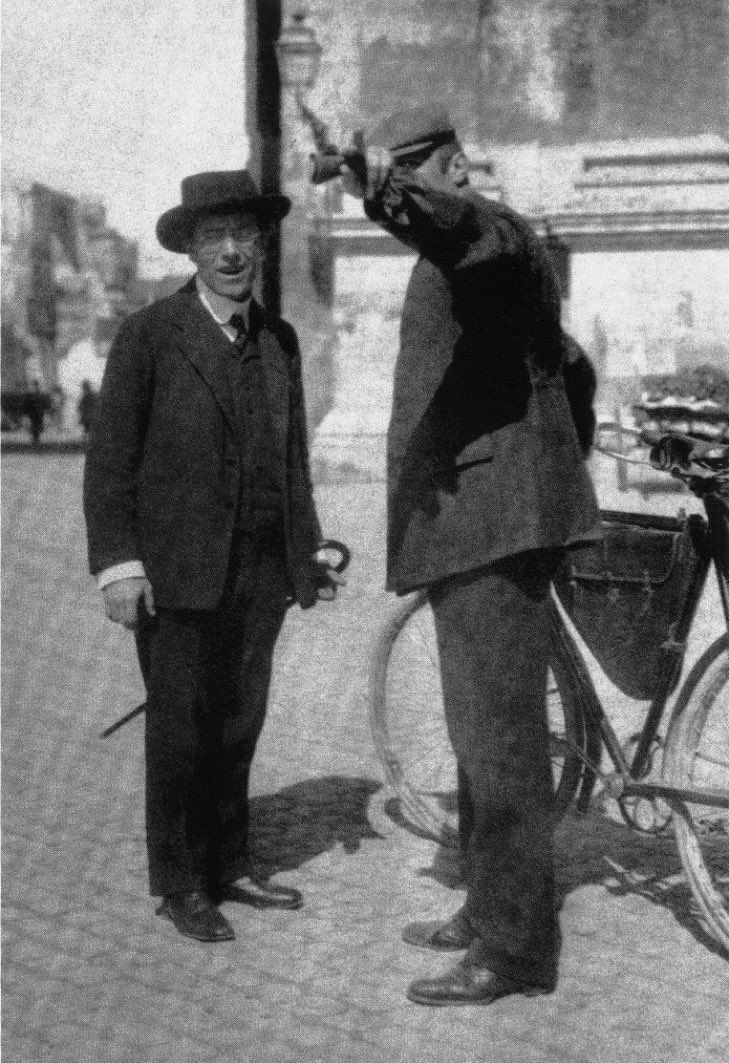
Gustav Mahler
Symphony No. 2 "Resurrection"
DIVE IN!
Gustav Mahler (1860 – 1911) was a Bohemian born Austrian composer and conductor from the late Romantic era and early Modernist eras. Mahler was primarily well known as a successful conductor with a strong and established reputation as an opera conductor throughout the best opera houses in Europe, despite being frequently dragged by anti-Semitic journalists both for being Jewish and for converting to Catholicism in order to suit anti-Semitic hiring demands. Sounds like a familiar timeline.
Some of his most significant influence as a conductor came with his Music Director appointments to the New York Philharmonic and Metropolitan Opera as well as multiple appearances at Carnegie Hall. He found some initial mixed success with his composition, partly due to his leaning into newer compositional techniques and concepts of the time, and partly due to the same anti-Semitic sentiments that swirled around his conducting career. Performances of Mahler’s music was banned in German occupied and sympathizing countries during the Nazi party’s dominance, but once the war was over Mahler’s compositions found their audiences and his work has become celebrated throughout the world.
About the music
Gustav Mahler began composing Symphony No. 2 in 1888 and finished it 1894. It was premiered in 1895, the same year X-ray technology was discovered. That last part has absolutely no relevance but it’s fun to sprinkle in random facts sometimes. 🤓
I also think it’s neat to consider how my grandfather was born (in 1891) during the span of time Mahler was composing this piece of music that he themed around big concepts of life, death, and resurrection. But that's even less relevant than the invention of the X-ray.
Symphony No. 2 was the first symphonic work of Mahler’s in which he delved into these big concepts, and the first of his symphonies to use vocal soloists and chorus. 🤓NERD ALERT for your next trivia night - Beethoven’s Symphony No. 9 is considered the 1st symphonic work to use a vocal element, and Mahler’s Symphony No. 2 is only the 7th major symphonic work to use vocal elements after that. Extra deep cut nerd fact - Felix Mendelssohn’s “Lobgesang” Symphony No. 2 is the 3rd in that lineage and Colorado Symphony performed that one this season waaaaay back in November. We’ve got Beethoven’s 9th on our season opener in September so apparently THIS IS THE TIME FOR CHORAL SYMPHONIES.
In this case, Mahler uses soprano and mezzo soprano soloists in addition to the chorus. Most of this happens in the final (5th) movement, but there is an arrestingly beautiful use of mezzo soprano in the 4th movement. The first three movements are orchestra only. So you should definitely feel for the chorus sitting and waiting their turn for an hour or so while being observed the whole time. Or you could be jealous of their really close seats!
Mahler didn’t nickname Symphony No. 2 by its popular subtitle “Resurrection” but the themes are very strong and he uses language from the Friedrich Gottlieb Klopstock poem “Die Auferstehung” (The Resurrection) in the chorus lyrics, which more or less sealed the fate of that subtitle!
The symphony is scored for a huge orchestra of 4 flutes (each doubling on piccolo), 4 oboes (3rd and 4th doubling on English horn), 2 clarinets in E-flat, 3 clarinets in B-flat (3rd doubling on bass clarinet), 4 bassoons (3rd and 4th doubling on contrabassoon), 10 horns, 6 trumpets, 4 trombones, tuba, triangle, high and low tam-tams, cymbals, glockenspiel, bells, side drum, bass drum, rute, timpani, 2 harps, organ, strings, soprano and mezzo-soprano soloists, and mixed chorus
A typical performance of Symphony No. 2 lasts 80-90 minutes.
Structure
The five movements and their significance are as follows:
I. Allegro maestoso: This movement begins with a funeral and the questions "Why have you lived? Why have you suffered? Is it all some huge, awful joke?” At the conclusion of this large scope and fairly heavy movement there is a note in the conductor’s score to pause for “a duration of at least 5 minutes”. This is handled differently by individual conductors but most of the time is just a longer than usual pause before starting the second movement.
II. Andante moderato: This movement features a graceful Ländler style waltz, like a sunny afternoon prior to the tragedy of death.
III. In ruhig fließender Bewegung: This movement is a bit of a manic scherzo, moving us into some existential crisis. It elides directly into the fourth movement.
IV. "Urlicht" (Primeval Light): Here we have almost an inserted moment of spiritual meditation entrusting self to a higher power. This music features a beautiful solo for the mezzo soprano with orchestra.
V. Im Tempo des Scherzo (Finale): This final movement is absolutely massive in sound, with a powerful march that dissolves into a transparent texture of offstage horn calls matched with high woodwind birdlike cadenza figurations before completely winding down into an intensely soft chorus entrance. From there the music builds slowly toward a hopeful and triumphal ending. If you happened to see the film Maestro this is when Bradley Cooper really gets going.
Extras! 🎉🎶🤓
Speaking of Bradley Cooper, Leonard Bernstein’s version of his own self conducting is pretty solid. Here’s the ending of the final movement, also used as source material in Maestro.
Now compare to Bradley's version of Leonard Bernstein in that same spot of the music...
For this scene in the film, Philadelphia Orchestra and Metropolitan Opera music director Yannick Nézet-Séguin conducted the orchestra and coached Bradley Cooper on the moves. Check out this behind the scenes vid with Yannick:
Mahler himself was known to be a wildly gesticulating type of conductor. Enjoy this illustration depicting elements of his style!

Thank you for supporting my work here by subscribing to Beeson's Backstage Pass.


Comments